
 Shop Online
 Our Outlets
 Stay at Northfield Farm
 Borough Market
 Delivery
Christmas
Boxing Day and beyond: what to do with the leftovers
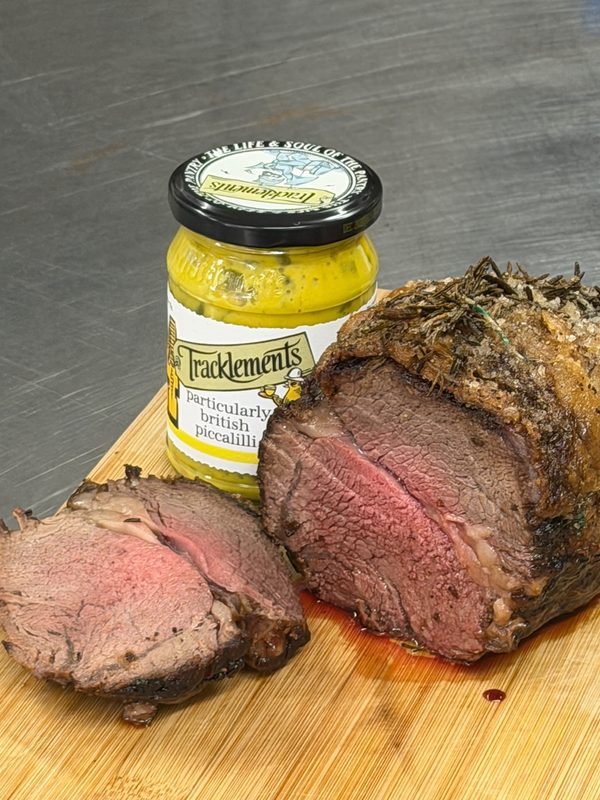
The big lunch is done, the table is a wreck and there is a joint sitting under a tea towel that is still, quite rightly, the best thing in the house. Cold roast beef on the second day is one of the great British pleasures, and a slowly reared, grass-fed animal gives you leftovers with enough flavour to carry three or four more meals without anyone complaining.
What follows is the practical part: how to keep it safely, how to get it hot again without turning it grey, and half a dozen things worth actually cooking between now and New Year.
First things first: cooling and storing
The single most useful thing you can do on Christmas night is deal with the meat before you deal with the washing up. Carve what is left off the bone while it is still warm and easy to work with, keep the bones back for stock, and get everything cooling.
- Cooked meat should be cooled and into the fridge within two hours of coming out of the oven. Spreading slices out on a plate or tray cools them far quicker than leaving a whole joint sitting in its own heat.
- Cover it properly, or box it, and keep the fridge at 5C or below. It is worth checking with a thermometer at this time of year, when the fridge is packed and the door is opened every ten minutes.
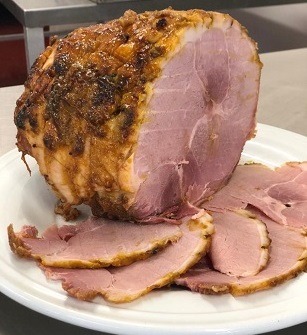
- Eat cooked beef, turkey, goose or ham within three days of cooking. Write the date on the box if the week has already blurred.
- If you know you will not get through it, freeze it within a day or two rather than at the last minute. Slice or dice it first, portion it flat in bags, and use it within about three months for the best texture. Defrost overnight in the fridge, never on the worktop.
- Gravy and stock keep three days in the fridge and freeze beautifully in an ice cube tray. Bring gravy back to a rolling boil when you reheat it.
Reheating without ruining it
The rule is simple: reheat once, and get it piping hot all the way through, steaming in the middle, around 75C if you have a probe. Anything that has been reheated once and not eaten goes in the bin rather than back in the fridge.
The way to do it without drying the meat out is moisture and a lid. Put your sliced beef in a dish, spoon over enough gravy or stock to come a third of the way up, cover tightly with foil and give it 20 to 25 minutes at 160C. In a frying pan, a splash of stock and a lid does the same job in five. A microwave works if you stir or turn halfway and then let it stand for a minute, which is when the heat evens out.
One exception worth knowing: beef that was served properly pink will never be pink again once it is reheated. If you like it rare, eat it cold in thin slices with mustard and be glad. Save the ends and the well-done outside cuts for the hot dishes below.
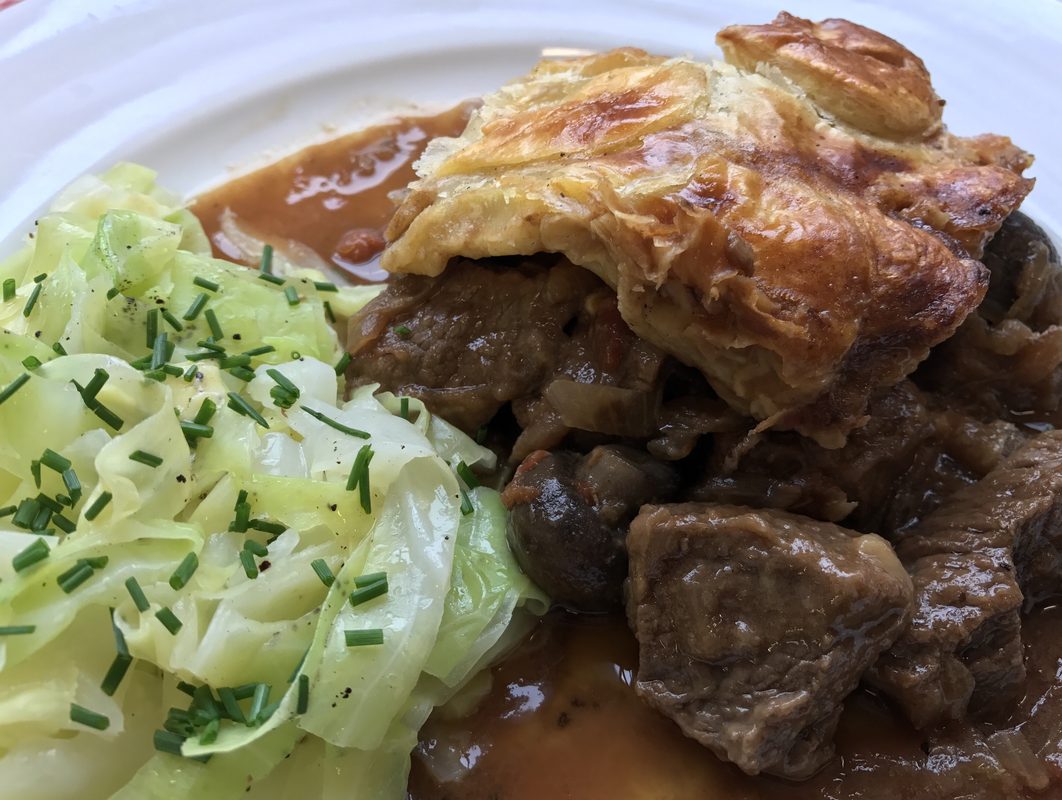
The pie, which is the real reason you kept the beef
Beef and cider pie, serves 4 to 6
This is the dish that earns its place every year. Cooked meat does not need braising, so the filling comes together in about 40 minutes and the pastry does the rest.
- 600g cooked beef, cut into rough 2cm pieces
- 40g Northfield beef dripping
- 2 onions, sliced
- 2 carrots, diced
- 250g chestnut mushrooms, quartered
- 40g plain flour
- 150ml cider, or a bottle of Grainstore cider with the rest for the cook
- 500ml beef stock, or leftover gravy topped up with water
- 2 teaspoons English mustard, a few sprigs of thyme, a bay leaf
- 375g all butter puff pastry and 1 beaten egg
- Melt the dripping in a wide pan and cook the onions and carrots gently for 10 minutes until soft and sweet. Add the mushrooms and cook hard for 5 minutes to drive off their water.
- Stir in the flour and cook for a minute, then pour in the cider and let it bubble down by half. Add the stock a little at a time, stirring, until you have a sauce that coats the back of a spoon.
- Add the mustard, thyme and bay, season well, then fold through the beef. Simmer 10 minutes, then cool completely. Warm filling makes soggy pastry.
- Tip into a pie dish, lay the pastry over, trim, crimp and cut a steam hole. Brush with egg.
- Bake at 200C for 30 to 35 minutes, until the pastry is deep gold and the filling is bubbling up through the hole.
Four more things worth cooking
Boxing Day hash, serves 2
Heat 2 tablespoons of dripping in a heavy frying pan. Add a sliced onion and 400g of leftover roast potatoes, broken up with the back of a spoon, and leave them alone for five minutes at a time so they crust properly. Add 250g of chopped beef, any leftover sprouts or parsnips, a good shake of Worcestershire sauce and plenty of pepper. Press it down, let a crust form underneath, then top with two fried eggs.
The best sandwich of the year
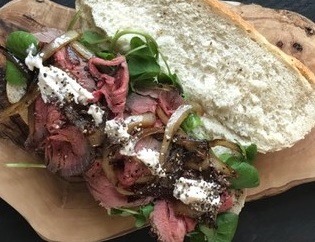
Thick white bread, salted butter, cold beef sliced as thinly as you can manage, horseradish cream, a little watercress and a pinch of Blackthorn sea salt flakes. No lettuce, no toasting, no improvement possible. Or explore our Tracklements page to find the perfect condiment for your sandwich.
Stock from the bones, makes about 2 litres
Break the bones up so they fit, roast them at 220C for 30 minutes if they are not already coloured, then cover with cold water in a big pan with an onion, two carrots, two sticks of celery, a bay leaf and a few peppercorns. Bring to a bare simmer, skim the scum off in the first ten minutes, then leave it ticking over for four hours. Strain, cool quickly and chill. It will set to a wobble overnight, which is exactly what you want. If your joint was boneless, a bag of beef bones is worth having in the freezer for this, and a jar of concentrated beef stock covers you when there is simply no time.
Broth for the 28th, serves 4
Sweat an onion, two carrots and two sticks of celery in a little dripping. Add 1.5 litres of that stock, 100g of pearl barley and a bay leaf, and simmer for 35 minutes until the barley is tender. Stir in 200g of chopped beef and any leftover greens right at the end, just long enough to heat through. Season hard and finish with parsley.
And when the leftovers run out
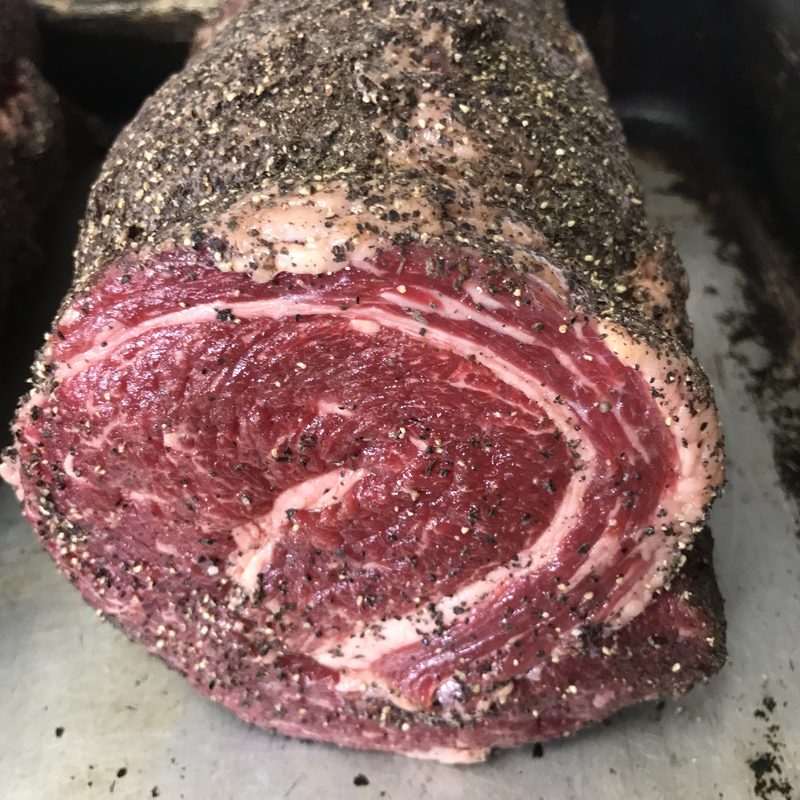
Somewhere around the 29th the mood turns. Everyone has had enough of cold cuts and wants something cooked from scratch again, but nobody wants another day of standing over the stove. That is the moment for a joint that looks after itself: a grass-fed brisket rubbed with salt and pepper, put into a low oven in the morning with a mug of stock and forgotten about until teatime. Traditional breeds reared slowly outdoors carry the fat and the connective tissue that a long, gentle cook turns into something rich enough to feed a house full of people who have already eaten very well indeed.
Whatever you cook, the same two rules hold: cool it fast, and reheat it properly hot. Do that, and the second week of Christmas eats every bit as well as the first.